

Shock vibration control
Efficiency
Save setup time with predefined shock geometries such as half-sine, haversine, trapezoid and more. Widely used shock test standard limits like MIL-STD, DEF STAN, and DO-160 are already included and can be loaded directly – so you can start shock vibration testing quickly and confidently.
Safety
Protect your specimen and shaker with intelligent safeguards: Peak value checks, multiple displacement compensation methods, and optional drive signal limitations ensure safe and reliable mechanical shock testing. In addition, displacement signals are calculated live from acceleration data via mathematical integration, giving you full visibility during every test.
Flexibility
Tailor your tests with full freedom: Combine sampling rate and number of samples to define individual window lengths and align the shock within the time window to capture post-shock decay behavior. Adjustable compensation parameters, including pre-pulse tolerance and frequency settings, make even complex setups feasible.
Quality
Achieve accurate and consistent results with high-precision control and complete data storage. Features like IEPE settling time for sensor response, configurable control on every pulse, and live coherence display provide trustworthy insights you can rely on during your shock test.
Precision shock vibration testing
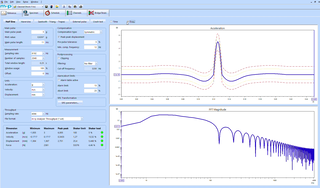
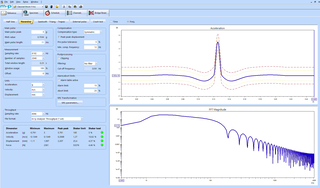
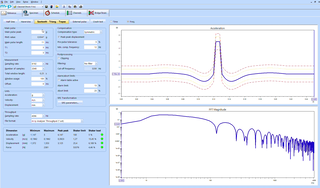
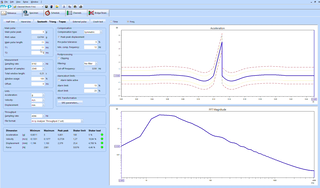
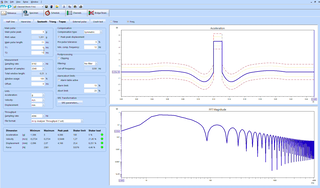
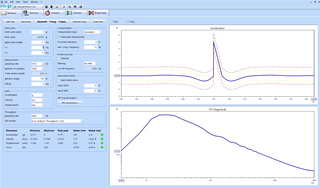
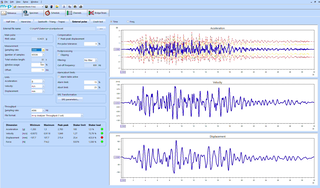
Individually configurable shock shapes - also imported
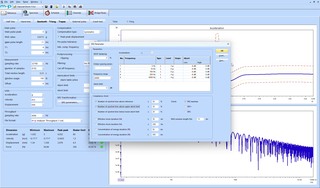
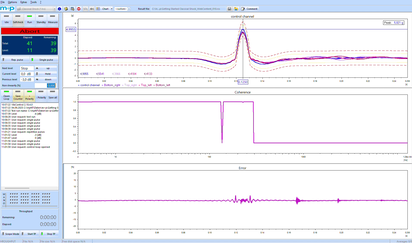
Whether half sine, sawtooth shock pulse, haversine or freely loaded shock shapes – with m+p VibControl, you can flexibly define and visualize the signal shape, velocity and displacement. Direct feedback on the frequency spectrum and shaker load ensures maximum reliability right from the creation stage.
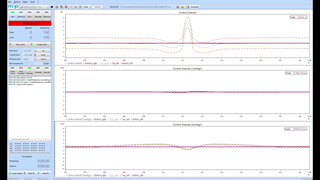
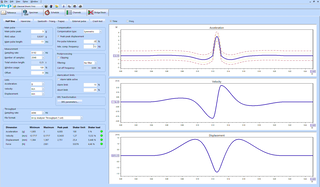
Integrated safety mechanisms protect the specimen and shaker
Visualized shaker load display, scope mode, ICP waiting time and individually definable abort limits ensure a safe test environment - even with high loads and sensitive setups.
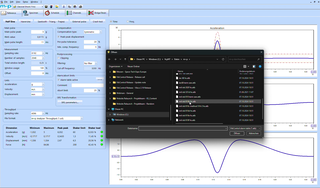
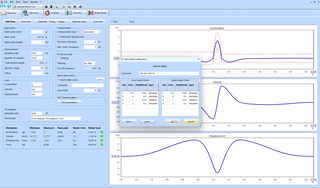
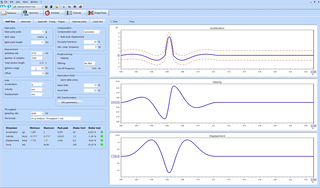
Standard compliance down to the last detail - including MIL-STD & Co.
With freely positionable shock pulses in the usable time window and sophisticated displacement compensation, even complex standards such as MIL-STD can be mapped precisely and professionally - including extensive setting options for pre- and post-pulse behavior.
Embedded SRS check for efficient test planning
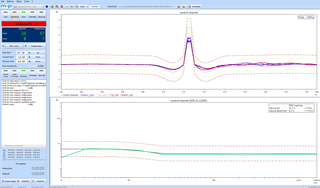
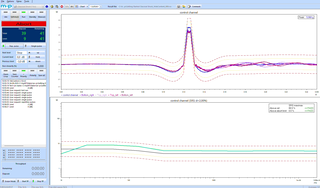
SRS parameters can be integrated directly into the classical shock test - this allows you to check during execution whether the signal meets the desired SRS curve. This saves time and often also a separate SRS test.
Flexible scheduling - all in one test
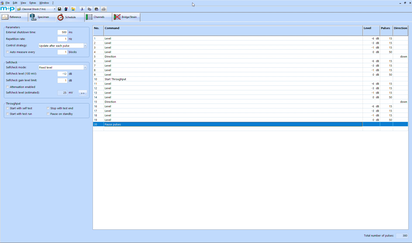
Create schedules with pre-levels, repetitions, direction changes and benefit from coherence and error metrics that can be viewed online - including manual fine-tuning with drive signal adjustment for experts.

Update to
m+p VibControl 2.19
Discover how the new features boost
your vibration testing.
Scalable measurement hardware systems - from 4 to hundreds of channels
m+p VibPilot - Compact DAQ systems
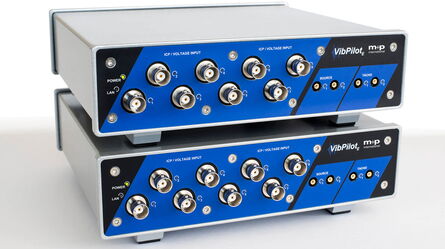
Choose our powerful, lightweight, and fan-less m+p VibPilot measurement front-end for all test setups with 4 or 8 channels and combinable for up to 32 channels, whether in vibration testing or in vibration and sound analysis.
m+p VibRunner - High channel count DAQ systems
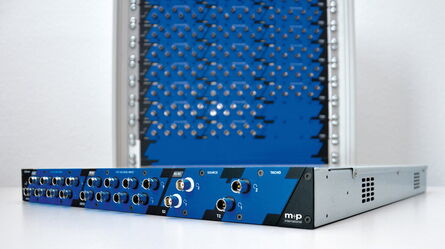
Test large structures or applications with high data throughput using our modular m+p VibRunner hardware platform that can be flexibly scaled to handle hundreds of input channels or multiple exciters.
Applications for shock load testing
Services

Support
We offer personalized support from experts with excellent response times, not anonymous call-centre hotlines.

Calibration
Choose between factory and ISO 17025 calibrations with on-site and rental services to minimize downtime.

Training
Our experts help you train new employees, master new testing challenges, or optimize specific test processes.

Maintenance Contracts
Let us take care of hardware calibration and software updates so you can focus on your tests.


“Life safety and security selected m+p as our preferred vibration controller supplier for the intuitive software and competitive pricing. As a UKAS accredited test house, we expect the highest levels of system reliability, stability and support which m+p have successfully delivered with every system.”

“Life safety and security selected m+p as our preferred vibration controller supplier for the intuitive software and competitive pricing. As a UKAS accredited test house, we expect the highest levels of system reliability, stability and support which m+p have successfully delivered with every system.”
“Life safety and security selected m+p as our preferred vibration controller supplier for the intuitive software and competitive pricing. As a UKAS accredited test house, we expect the highest levels of system reliability, stability and support which m+p have successfully delivered with every system.”
Case studies

Mahle Filtersysteme | DE
Engineering tests for vehicles airfiltration and engine components

Aerospacelab
A cutting-edge vibration test system

Element laboratory | UK
Shake and bake testing for aerospace components

China Electronics Technology Group Corporation | CN
Radar reliability testing
Shock vibration testing resources

Shock and vibration testing – FAQ
Shock testing is used to simulate high energy short duration transient pulses like drops or collisions, while vibration testing exposes test items to oscillating frequencies over longer durations to assess a product’s structural integrity and/or its dynamic properties such as resonances.
Half sine shock pulse
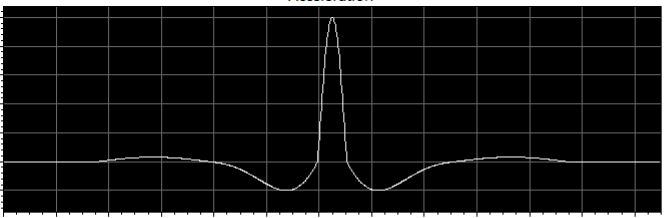
A half sine pulse is the most common form of classical shock pulse; it is essentially one half of a sine wave. The pulse contains low frequency content and is primarily used to test the response and resonances of a Unit Under Test.
Haversine shock pulse
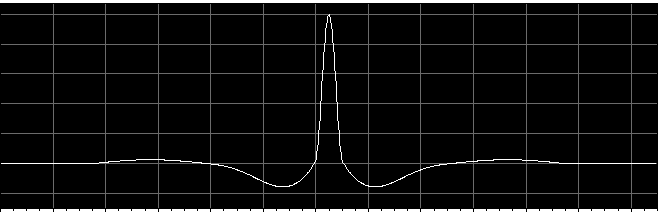
A haversine is slight variation of a half sine pulse with rounded of edges.
Sawtooth /Triangle/ Trapezoidal Pulse
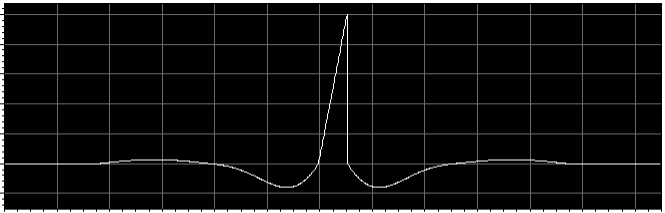
Sawtooth pulses have sharp transitions, the pulse mostly contains high frequency content, which is effective for testing electronic equipment. Due to the high frequency shock content potential failures in solder joints, components and circuity can occur. The shock pulse is used in military standards like MIL-STD-810H (Method 516.8) and MIL-STD-202 Method 213 for testing the durability of equipment.
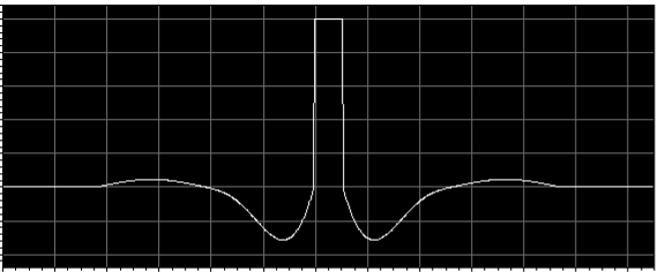
The characteristics of a trapezoidal pulse are sharp rise and fall times with a constant acceleration on the main pulse. Due to the shape of the time waveform the frequency content of the pulse is the most broad over the low/mid & high frequencies compared to other classical shock pulse types.
Unlike other forms of vibration testing where numerous control transducers can be used to run and control a vibration test, shock testing only permits one control transducer to be used on a shaker system. Selection of an optimum control point is critical when running a shock test.
• Electrodynamic shaker
• Free fall shock
• Pneumatic hammer
• Drop test machine